Monday, November 18, 2013

Monday, September 30, 2013
I Can't Get Enough of Pope Francis!
If this latest statement from the Pope doesn't swell your heart and water your eyes, well, then, you may want to go see your doctor. In theological terms, this is as compelling a statement of the doctrine of prevenient grace as you are likely to find. It is also the indispensable motive for evangelization.
"I have a dogmatic certainty: God is in every person’s
life. God is in everyone’s life. Even if the life of a person has been a
disaster, even if it is destroyed by vices, drugs or anything else—God is in
this person’s life.
You can, you MUST try to seek God in every human life. Although the life of a person is a land full of thorns and weeds, there is always a space in which the good seed can grow. You have to trust God."
— Pope Francis on why God is in every person's life...
For a good analysis of the new Pope that comports with my understanding, read Michael Gerson here: http://www.washingtonpost.com/opinions/michael-gerson-pope-francis-the-troublemaker/2013/09/23/19084384-2481-11e3-b75d-5b7f66349852_story.html
And here is another account from his long-time friend, Anglican Archbishop Greg Venables:
http://www.christianitytoday.com/gleanings/2013/march/first-latin-american-pope-bergoglio-archbishop-of-buenos.html
Best of all is this interpretative analysis by Cardinal George:
http://www.catholicnewworld.com/cnwonline/2013/0929/cardinal.aspx
You can, you MUST try to seek God in every human life. Although the life of a person is a land full of thorns and weeds, there is always a space in which the good seed can grow. You have to trust God."
— Pope Francis on why God is in every person's life...
For a good analysis of the new Pope that comports with my understanding, read Michael Gerson here: http://www.washingtonpost.com/opinions/michael-gerson-pope-francis-the-troublemaker/2013/09/23/19084384-2481-11e3-b75d-5b7f66349852_story.html
And here is another account from his long-time friend, Anglican Archbishop Greg Venables:
http://www.christianitytoday.com/gleanings/2013/march/first-latin-american-pope-bergoglio-archbishop-of-buenos.html
Best of all is this interpretative analysis by Cardinal George:
http://www.catholicnewworld.com/cnwonline/2013/0929/cardinal.aspx
Wednesday, September 25, 2013
Pope Francis - Conservative, Liberal, or What?

In a recent Washington Post Blog entry there was this bit of news on the new Pope:
In
spiritual leadership, changes in style, tone, and emphasis are real changes.
Recently Pope
Francis phoned a 35-year-old Italian woman, who had written to him because the
man who had gotten her pregnant was advising her to get an abortion. She didn’t want to,
but she was frightened and alone. The pope encouraged her not let anyone rob
her of her hope and assured her that, if necessary, he would perform the
child’s baptism himself.
The following story by Michael Gerson strikes me as getting the new Pope just about right:
I will continue to post interesting stories on the new Pope as we read together his first encyclical, The Light of Faith.
Wednesday, September 18, 2013
Guest Speakers at Truro This Fall
We have an embarrassment of riches at Truro. This is especially evident in the guest speakers that come our way. This fall we have three in particular I want to highlight and ask that you mark your calendar to be sure to hear them.
 The Rt. Rev. John Howe will be here October 5-6. On Saturday October 5, he will preach at Joseph Kitt's memorial service. Joe was a much beloved priest who John called as his associate in the late 1970's. On Sunday, Bishop Howe will preach the three main morning services. We are immensely pleased to welcome back John and Karen Howe to Truro!

On Oct 26-27, the Rev Nigel Mumford will be leading a healing mission co-sponsored with Church of the Apostles. A retired Royal Marine, Nigel has been particularly equipped to minister to those who suffer from various anxiety disorders, especially post-traumatic stress. This is a great opportunity to minister to those in the military or law enforcement or anyone who suffers from post-traumatic stress - whatever its cause.
 Ms. Anna Halpine is the founder of World Youth Alliance. WYA is a service and advocacy organization which excels in training young people in social advocacy work from a Christian world view. Anna will be speaking at an event for Truro young people on Saturday and at the Rector's forum on Sunday, December 22. A version of WYA and Anna's story is found here: http://en.wikipedia.org/wiki/World_Youth_Alliance
These three speakers bring a timely message for our parish and I hope you and your family will be in attendance to learn more how we can partner with God in the healing and transformation of the world through the good news of Jesus Christ.
 The Rt. Rev. John Howe will be here October 5-6. On Saturday October 5, he will preach at Joseph Kitt's memorial service. Joe was a much beloved priest who John called as his associate in the late 1970's. On Sunday, Bishop Howe will preach the three main morning services. We are immensely pleased to welcome back John and Karen Howe to Truro!
On Oct 26-27, the Rev Nigel Mumford will be leading a healing mission co-sponsored with Church of the Apostles. A retired Royal Marine, Nigel has been particularly equipped to minister to those who suffer from various anxiety disorders, especially post-traumatic stress. This is a great opportunity to minister to those in the military or law enforcement or anyone who suffers from post-traumatic stress - whatever its cause.

These three speakers bring a timely message for our parish and I hope you and your family will be in attendance to learn more how we can partner with God in the healing and transformation of the world through the good news of Jesus Christ.
Thursday, September 12, 2013
"Relational Orthodoxy" - in a Vatican Accent

Pope Francis keeps throwing Molotov cocktails of love into our binary, Machiavellian partitioned worlds. At the end of this article he articulates the Christian understanding of Truth in terms of Jesus and our relationship to him. He states, "truth is a relationship." It merits reading and contemplation:
http://www.religionnews.com/2013/09/11/pope-francis-tells-atheists-to-obey-their-conscience/
hat tip/SH
Monday, September 9, 2013
Apostle's of North American Christianity

The more I reflect on their lives the more I become convinced that one cannot understand the Christianization of North America without reflecting on the apostolic force of early Methodism. Each man, in his distinct vocational role, learned to indigenize the gospel for those who remained outside of Christian faith and community.
If you wish to learn more about this era I recommend two chapters of Mark Noll's America's God (chs. 15-16). If that whets your appetitie then turn to John Wigger's American Saint: Francis Asbury and the Methodists.
Their exemplary lives merit further reflection as we find ourselves in an America that needs re-Christianization.
Thursday, July 25, 2013
Through the Bible: Week 49, Romans - part 8
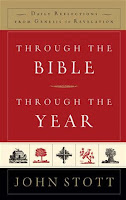
Romans 5:1-11
I still
remember the celebration and solidarity that the 1971 Super Bowl Chiefs brought
to the tense city of Kansas City. The heroes were white and black, native born
and immigrants. Our civic and racial divisions
were (momentarily) reconciled in the common celebration of a victorious team
who belonged and reflected us all.
The subtext
of Paul’s argument is that God has demonstrated his love by reconciling all of
humanity through the death and resurrection of the Messiah, his son. The church, in its common life, is to model
the kind of relations God wishes for the world. The church is made up of people
who are exchanging identities rooted in native land, blood and ideology for an
identity shaped and informed by the victory of God in Jesus. We are united by
the celebration of Jesus’ victory for us. Three times Paul states the basis of
our celebration or rejoicing (cf. boasting – 2:17, 23, 3:27):
1. We
rejoice in hope of future glory – our
true end (v.2)
2. We
rejoice in the reality of present suffering
– our normal means (v.3)
3. We
rejoice in God’s past victory of
reconciliation in Jesus (v. 6-11)
This comprehensive celebration, if practiced continually and
with understanding, will encourage the Church to experience the new humanity
that God is creating around Jesus. Let’s
consider how that can be.
5: 1-2
Instead of boasting in our heritage (Jewish, Greek, etc. -
Paul’s argument in chs. 2-4), we are invited to boast rather in God’s
accomplishment in Jesus. We have access
to a peace that his death makes possible.
We now stand in grace – an environment of costly and unmerited
love. The imagery is possibly of the
temple, where a worshipper is invited into the presence of God through the
atoning sacrifice of his offering. The
presence of God in the temple portends a future life of unbroken connection and
pleasure in God.
5:3-5
Our present and difficult experiences in life might make
such a celebration short-lived. So what
do we do? Paul places them in the
context of our guaranteed future – our unbroken fellowship and connection with
God – as an essential preparatory experience.
We need the testing of suffering to strengthen our character and hope
for the wait is often long and arduous. But God’s love in our hearts reassures
us that we are part of God’s future, new people.
5:6-11
The validation of God’s love is not merely experiential; it
is historical and rare. A person might
die for a good person but Jesus died for us when were sinners – separated and
separating from God. And if his death reconciled
us to God how much more will his life in us prepare us for the future. The contemplation of this should lead us to
rejoice in God.
Subscribe to:
Posts (Atom)